As an Amazon Associate, we earn from qualifying purchases. Some links on this site are affiliate links at no extra cost to you. Our recommendations are based on thorough research and editorial judgment.


Understanding Wide Feet and Why Standard Sizes Fail

Wide feet arise from complex structures—26 bones, 33 joints—and conditions like bunions or obesity that broaden foot width up to several millimeters, surpassing standard shoe limits. Standard sizing focuses on length with one width per size, neglecting categories like wide (E) or extra wide (2E), which increase forefoot width by 6.4–9.5 mm increments. Expert fitters recommend Brannock device measures late day. Customized shoes, priced $250–$400, enhance comfort and support—insights valuable for those seeking proper fit solutions.
Key Takeaways
- Wide feet result from genetics, aging, health issues like bunions, and factors such as pregnancy or obesity increasing foot width.
- Standard shoe sizes focus on length with limited width variations, failing to accommodate diverse foot shapes, especially wide feet.
- Inconsistent width labels across brands complicate shoe fitting and often lead to buying longer shoes, worsening fit and comfort.
- Wide fit shoes offer necessary toe space and arch support, reducing foot pain, pressure, and injury risk for people with wide feet.
- Advanced technologies like 3D scanning and AI enable personalized shoes, addressing comfort and fit where standard sizing falls short.
The Complexity of the Human Foot
Because the human foot supports the entire body during movement, its complexity is essential for stability and function. It comprises 26 bones, 33 joints, and over 100 muscles, tendons, and ligaments that contribute to diverse foot shapes and sizes. Traditional sizing often neglects shoe width variations, leading to discomfort and harmful pressure points from ill-fitting footwear. The average foot size in the U.S. has increased markedly since the 1970s, and wider feet are now more common. Expert podiatrist Dr. Jane Morris advises that “accurate measurement encompassing length and width guarantees a comfortable fit and improves overall foot health.” Consumers with wider feet benefit from brands offering extended widths, as proper shoe width accommodates foot shape better than traditional sizing. Misfit shoes can exacerbate pain and deformities, emphasizing the need for precise measurement in footwear selection. Additionally, selecting sneakers with podiatrist-certified arch support can significantly improve comfort and alleviate foot pain.
Causes of Wide Feet and Their Impact

While genetic predisposition plays a primary role in foot width, several other factors contribute to wide feet, including aging, health conditions, and lifestyle changes. Genetic factors dictate initial foot measurements, but aging causes ligaments and tendons to lose elasticity, resulting in wider foot width that demands extra wide shoe sizes for a comfortable fit. Health conditions, such as bunions or flat feet, often lead to foot disorders that necessitate wider shoes to prevent discomfort. Temporary changes, like pregnancy-related swelling, also impact shoe fit. Obesity adds pressure, enlarging foot width considerably. Ill-fitting shoes worsen symptoms by compressing the foot’s natural shape, intensifying foot disorders. Footwear experts emphasize precise foot measurements to guarantee proper fit—“A shoe that fits all dimensions prevents pain,” notes podiatrist Dr. L. Foster, reflecting user feedback on improved comfort with extra wide models. For those needing reliable support on slippery surfaces as well, traction control shoes with features like adjustable straps can accommodate wider feet while enhancing stability outdoors.
Limitations of Standard Shoe Sizing Systems

Although standard shoe sizing systems attempt to simplify footwear selection, their reliance on a single width designation per length inadequately addresses the vast diversity in foot shape and width. Most shoes come in a standard width—which for women is typically a B and men’s a D—yet these fail to fit many with wide feet comfortably, often causing foot pain and blisters. Sizing systems inconsistently label widths across brands, complicating the process to find wide shoes that truly fit. Misusing standard width sizing may lead consumers to buy longer shoes in hopes of added width, but this often worsens fit and comfort. Experts recommend you measure your feet regularly to select properly fitting shoes that accommodate actual foot width, rather than relying solely on generalized sizing standards. Choosing shoes with a wide toe box can greatly improve comfort and reduce pressure points for those with wider feet.
Recommended Products


ECCO rich two-tone yak leather, made in our own tanneries, offers a smooth, yet durable finish

Over-the-knee boot with low heel and stretchy contrast back panel
Understanding Foot Width Categories and Labels

Standard shoe sizing systems often overlook the complexity of foot width, which varies widely among individuals. Foot width is categorized primarily as narrow feet (A), medium width (B for women, D for men), wide width shoes (E), and extra wide (2E, 4E). Each increment—especially the E width—indicates a measurable increase in forefoot width, altering shoe shape to accommodate wider feet comfortably. Accurate measurement, ideally conducted with a Brannock device at day’s end when feet swell, guarantees selection within appropriate width categories. Brand differences mean that a D width in one shoe may differ in fit from another, making trial essential. As podiatrist Dr. Jenna Moore notes, “Selecting the correct foot width is essential for a comfortable fit and foot health.” Customers report greater comfort using wide width shoes tailored to their precise measurement. Incorporating shoes with a wide toe box can significantly alleviate pressure on conditions like bunions and plantar fasciitis, enhancing daily comfort.
Signs That Indicate the Need for Wide Shoes
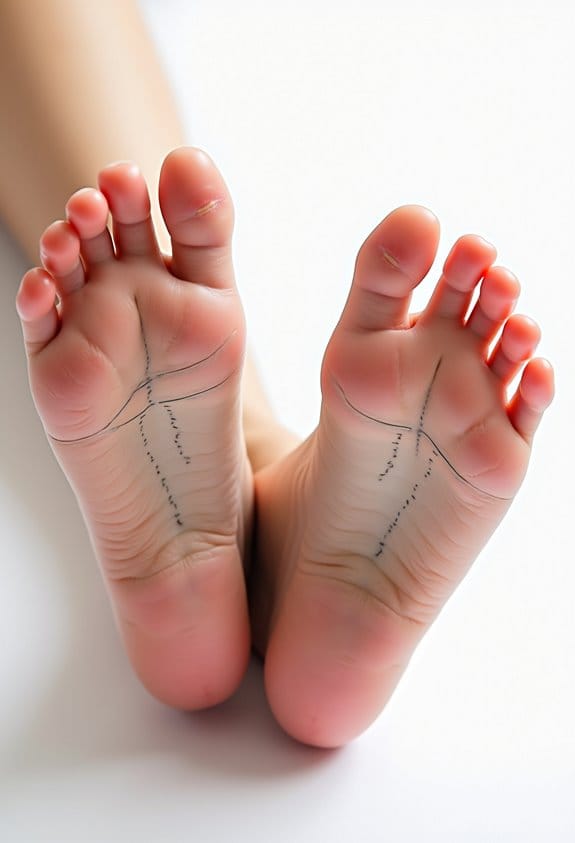
How can one recognize the need for wide shoes before discomfort worsens? Signs that indicate wide feet include a feeling of being cramped, bulging at shoe sides, and frequent blisters or corns caused by narrow width sizes. Users often experience tingling or cramping, which signals inadequate shoe fit rather than foot length issues. Foot health specialist Dr. Lina Mach advises that “extra room in width is critical to avoid chronic pain and foot deformities.” Many with wide feet don’t need wide lengths but require wider dimensions to be comfortable without pain. Regularly evaluating foot changes — due to aging, weight gain, or pregnancy — determines if wider shoes are necessary. Consumer reports rate models like New Balance 990v5 highly for offering precise extra width sizes at $175, combining style with orthopedic support. Additionally, choosing sneakers with proper cushioning and arch support is essential for maintaining long-term foot health and preventing injuries.
Recommended Products


Proper Methods to Measure Foot Width
Identifying signs of wide feet leads naturally to understanding proper measurement techniques. To measure foot width accurately, it is best to do so in the evening when feet are slightly swollen, reflecting daily wear conditions. The Brannock Device—an industry standard—measures both length and width, offering precise readings that help differentiate narrow, medium feet, and wide feet sizes. Alternatively, tracing the outline of your foot on paper and marking the widest points provides a practical way to measure the width of your feet. Since one foot can be wider than the other, measuring both and using the larger measurement guarantees a wider fit and properly fitting footwear. The footwear industry’s emphasis on personalized fit increasingly relies on these accurate methods to help consumers fit correctly. Understanding the importance of a wide toe box further ensures that footwear provides comfort and support tailored to wide feet.
Recommended Products

EXCLUSIVE WARRANTY: Experience unmatched assurance with our unique warranty, a rare offering in the massage chair industry. This covers all mechanical and electrical components, ensuring your investment is protected for a long time relaxation and comfort.

sku=36768103-6

IDEAL FOR THE WORKPLACE: Use with single faced pallets, skids and bulk containers for best results. Fits in tight, narrow aisles.
Benefits of Wearing Wide Fit Shoes
While many may overlook the importance of foot width, wearing wide fit shoes offers substantial benefits for individuals with broader feet. Wide fit shoes provide a comfortable fit by offering extra space in the toe box, which allows natural toe splay and reduces pressure on sensitive areas prone to bunions and corns. This design improves balance and lowers the risk of foot-related injuries. Specialized footwear brands, such as KURU, integrate heel-hugging technology with wide widths to support foot anatomy, promoting healthier feet during prolonged use. Users report reduced discomfort and enhanced stability. According to podiatrist Dr. Linda Chavez, “Appropriate width is essential for foot health—wide fit shoes prevent many common problems.” As the demand grows, the $6.8 billion wide-fit market highlights increasing consumer awareness. Moreover, selecting shoes with adequate arch support is crucial, as it promotes proper foot alignment and prevents strain that could worsen foot conditions.
Recommended Products


Crafted in durable ECCO leather with 100% GORE-TEX waterproof protection, so your feet stay dry

Large air heel element - for optimal cushioning and a light running feeling
Innovations and Future Directions in Shoe Fit Technology
As the footwear industry embraces cutting-edge technologies, innovations such as 3D scanning and AI-driven customization play a pivotal role in improving shoe fit. Companies like IAMBIC employ 3D scanning to capture precise foot dimensions—length, width, and arch height—enabling customized footwear tailored for wide feet, addressing common discomforts. These innovative sizing solutions integrate biomechanical balance to optimize gait and reduce pain points. Additionally, comfort questionnaires and wear pattern analysis inform iterative design improvements, ensuring real-world effectiveness. Dr. Jane Ellis, podiatrist, confirms, “Personalized footwear greatly enhances biomechanical function for varying foot sizes.” Consumers report improved comfort and fit with bespoke options priced from $250 to $400. As market demand for personalized footwear grows, ongoing advances promise better shoe fit and increased satisfaction for individuals with wide feet, potentially revolutionizing standard sizing conventions. Recent studies also highlight the importance of breathable materials in maintaining comfort and reducing foot odor in wide shoes, which can be effectively incorporated into personalized designs.
Recommended Products


Frequently Asked Questions
Do You Size Down for Wide Width Shoes?
Sizing down for wide width shoes is generally discouraged; proper sizing strategies prioritize true foot dimensions, balancing comfort factors like arch support and material flexibility. Brand variations, insole options, style choices, and shoe trends collectively influence ideal foot health.
What Is the Difference Between a Wide Foot and a Standard Foot?
A wide foot anatomy features increased forefoot width, necessitating shoe fitting tips like precise foot measurement methods. Common misconceptions ignore brand sizing variations and orthopedic considerations, while comfort factors, lifestyle influences, style options, and personalized solutions differentiate wide and standard foot requirements.
How Much Bigger Is a Wide Shoe Compared to a Regular Shoe?
Wide shoe measurements typically exceed standard shoe dimensions by 1/4 to 1/2 inch, addressing foot width variations. Shoe fit considerations include arch support relevance, orthotic shoe options, brand sizing differences, style choices availability, comfort preferences analysis, and foot health impact.
How Does Foot Width Affect Shoe Size?
Foot width dances subtly, shaping shoe size like a sculptor molds clay. Using foot measurement techniques and width sizing charts reveals common width sizes, guiding shoe fitting tips, orthotic insoles benefits, and adjustable footwear advantages for athletic or casual shoe selection.


